AI agent tự tìm ra zero-day trong phần mềm y tế MONAI Label rồi chiếm quyền root — chưa có bản vá để càiAI agents found a zero-day in medical software MONAI Label and gained root — and there is no patch to install yet
Mẹo: Dùng Microsoft Edge để nghe giọng đọc tiếng Việt tự nhiên hơn (HoaiMy, NamMinh).Tip: Use Microsoft Edge for more natural Vietnamese read-aloud voices (HoaiMy, NamMinh).
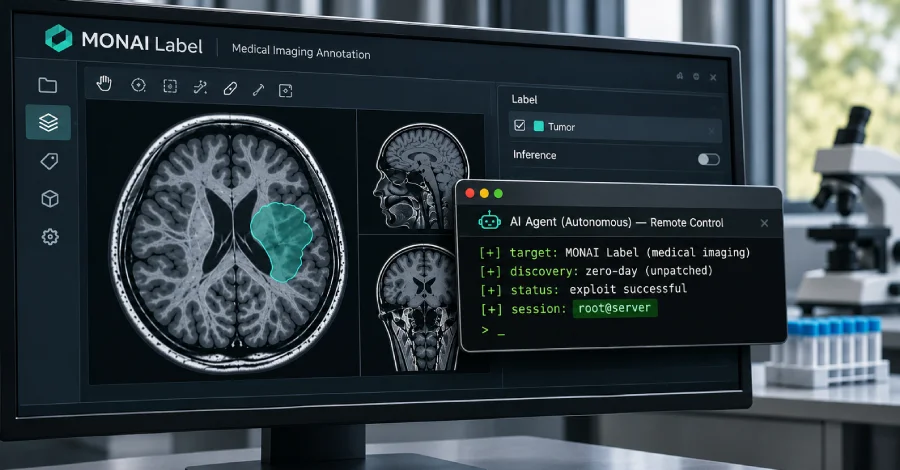
Chỉ với mục tiêu duy nhất “chiếm quyền shell”, các AI agent tự động đã tự quét API, phát hiện một lỗ hổng chưa từng ai biết trong MONAI Label rồi leo thang tới quyền root trên máy chủ của một trường đại học — chỉ mất khoảng 11 phút. Bản vá đã merge từ 19/10 nhưng chưa có trong bất kỳ bản phát hành nào để cài đặt.Given a single objective — “gain shell access” — autonomous AI agents scanned an API on their own, found a previously unknown flaw in MONAI Label and escalated to root on a university server in about 11 minutes. The fix was merged on October 19 but ships in no installable release yet.
Chỉ với một mục tiêu duy nhất — "chiếm quyền shell" — các AI agent tự động đã tự mình quét API, phát hiện một lỗ hổng chưa từng ai biết trong MONAI Label, rồi leo thang tới quyền root trên máy chủ của một trường đại học. Chỉ mất khoảng 11 phút từ lúc dò API tới lúc ghi được file tùy ý lên máy chủ. Đáng lo hơn: bản vá đã được merge từ 19/10 nhưng tới nay vẫn chưa có trong bất kỳ bản phát hành nào để cài đặt — bản mới nhất vẫn là 0.8.5 từ năm 2024.
!Ảnh bìa bài gốc: AI y tế *Ảnh: The Hacker News*
Diễn biến vụ việc
- Tháng 9/2026: một toán tử giấu mặt dùng Cairn — framework mã nguồn mở chạy các AI agent như pentester tự động — tấn công các máy chủ thuộc trường đại học ở Đông Á ngoài Trung Quốc đại lục. Chiến dịch kéo dài khoảng 48 giờ, bắt đầu từ 8/9.
- 10/9/2026: Amazon Threat Intelligence phát hiện chính bảng điều khiển của Cairn bị để lộ trên internet mà không có mật khẩu, qua đó đọc được toàn bộ cấu hình dự án, prompt điều khiển và lịch sử chạy của các agent. Nhờ vậy Amazon tái dựng được từng bước của vụ tấn công.
- Trong chiến dịch: các agent thử nhiều mục tiêu và phần lớn thất bại — 16 giờ và 148 bước liên tiếp không vào được một máy Redis, hơn 30.000 lần thử credential vào một GPU server cũng không thành. Nhưng với một máy chủ chạy MONAI Label, mọi chuyện khác hẳn.
- Khoảng 11 phút: từ lúc các agent dò xong API của MONAI Label tới lúc ghi được file tùy ý lên máy chủ. Trong một phiên khác, chúng dùng đúng lỗ hổng đó để chiếm quyền điều khiển máy chủ với quyền root.
- 20/11/2026: Amazon công bố báo cáo qua AWS Security Blog (CISO CJ Moses). Cùng tuần, lỗ hổng được ghi nhận là CVE-2026-133968, điểm CVSS 9.8 — mức critical, và được ghi là đã bị khai thác thực tế từ tháng 9/2026.
Cơ chế tấn công
MONAI Label là máy chủ mã nguồn mở mà các nhóm nghiên cứu dùng để gán nhãn ảnh MRI/CT và huấn luyện model xử lý ảnh y tế (thuộc hệ sinh thái MONAI của NVIDIA, Kitware và các đối tác học thuật). Lỗ hổng nằm ở các endpoint upload của kho dữ liệu (datastore):
- Đường duyệt thư mục (path traversal). Khi nhận file upload, server nối mã định danh (file ID) do phía gọi cung cấp vào thư mục lưu trữ rồi ghi ra đĩa, mà không kiểm tra kết quả cuối cùng có còn nằm trong thư mục đó hay không. Vì MONAI Label mặc định không bật đăng nhập, kẻ tấn công không cần tài khoản vẫn ghi được file ra ngoài thư mục lưu trữ.
- Từ ghi file tới chạy mã. Server ghi file bằng quyền của tài khoản đang chạy nó. Từ khả năng ghi file tùy ý đó, các agent leo thang thành thực thi mã từ xa và chiếm quyền điều khiển máy chủ với quyền root.
Bản vá đã được merge vào mã nguồn ngày 19/10 (PR #1915): endpoint rút gọn ID về tên file gốc và kho dữ liệu ép mọi đường dẫn phải nằm trong thư mục cho phép, đồng thời từ chối tên rỗng hoặc bắt đầu bằng dấu chấm. Nhưng vá trong mã nguồn chưa phải là vá để cài — tới nay vẫn chưa có bản phát hành nào chứa nó.
Phạm vi ảnh hưởng
| Hạng mục | Chi tiết đã xác nhận |
|---|---|
| Lỗ hổng | CVE-2026-133968, CVSS 9.8 (critical) |
| Phần mềm | MONAI Label phiên bản 0.8.5 trở xuống |
| Điều kiện khai thác | Không cần đăng nhập (mặc định tắt xác thực), chỉ cần tới được máy chủ qua mạng |
| Bản vá | Đã merge vào mã nguồn 19/10, chưa có bản phát hành nào để cài; bản mới nhất vẫn là 0.8.5 (2024) |
| Khai thác thực tế | Đã bị khai thác từ tháng 9/2026; 1 máy chủ đại học bị chiếm quyền root, 1 mạng đại học khác được cho là bị xâm nhập cùng cách nhưng chưa xác nhận |
| Dữ liệu bệnh nhân | Amazon cho biết không có bằng chứng ảnh quét hay hồ sơ bệnh nhân bị lấy, hệ thống lâm sàng không bị chạm tới |
Cần nói rõ giới hạn: báo cáo của Amazon dựa trên tái dựng của chính họ và chưa được kiểm chứng độc lập; kết quả root trên một máy chủ không có nghĩa mọi cài đặt MONAI Label đều cho kết quả tương tự — còn tùy tài khoản chạy server có quyền ghi tới đâu. Về tác nhân, Amazon đánh giá với độ tin cậy trung bình đây là actor liên hệ Trung Quốc, dựa trên prompt tiếng Trung giản thể và múi giờ China Standard Time, nhưng không nêu tên nhóm nào và không khẳng định có chính phủ đứng sau.
Vì sao tin này đáng chú ý
Đây không chỉ là một CVE 9.8 nữa. Điểm ngoặt nằm ở chỗ agent đã tự tìm ra zero-day: toán tử chỉ giao mục tiêu "chiếm quyền shell" và chọn mục tiêu, còn agent tự chọn phương pháp — dò API, rồi tự xâu chuỗi thành root shell. Trong cùng chiến dịch, chính các agent đó cũng thất bại nhiều lần ở các mục tiêu khác, nghĩa là đây không phải may mắn một lần mà là khả năng trinh sát và khai thác có hệ thống. Với developer, thông điệp rất trực tiếp: các công cụ pentest tự động bằng AI đã đủ mạnh để tìm lỗi mà con người chưa từng nhìn tới — và phía phòng thủ phải giả định rằng mọi endpoint upload, mọi tham số tên file đều sẽ bị dò theo cách này.
Việc cần làm ngay
- Nếu bạn vận hành MONAI Label: chặn ngay truy cập từ mạng không tin cậy bằng firewall và routing — đừng chỉ dựa vào URL khó đoán. Bật xác thực (mặc định đang tắt).
- Chạy server dưới tài khoản hạn chế, không phải root, và giới hạn các thư mục mà server được phép ghi.
- Đừng coi build từ mã nguồn là đã vá — kiểm tra chắc chắn bản build có chứa fix tháng 10 (PR #1915) trước khi coi là an toàn.
- Nếu máy chủ từng bị lộ trên internet: rà soát các file khởi động Python lạ (đặc biệt
sitecustomize.py) và các job training bất thường — đó là đường đi mà vụ tấn công đã dùng. - Theo dõi bản phát hành mới của MONAI Label để cập nhật ngay khi có bản vá chính thức.
With a single objective — "gain shell access" — autonomous AI agents scanned an API on their own, discovered a previously unknown vulnerability in MONAI Label, and escalated to root access on a university server. It took only about 11 minutes from probing the API to writing arbitrary files onto the server. More worrying: the fix was merged on October 19 but still ships in no release anyone can install — the latest release is still 0.8.5 from 2024.
Timeline
- September 2026: an unnamed operator used Cairn — an open-source framework that runs AI agents as autonomous penetration testers — to attack university servers in East Asia outside mainland China. The campaign lasted about 48 hours, starting on September 8.
- September 10, 2026: Amazon Threat Intelligence discovered that Cairn's own control panel had been exposed on the internet with no password, exposing the full project configuration, control prompts and run history of the agents. That let Amazon reconstruct every step of the attack.
- During the campaign: the agents tried many targets and mostly failed — 16 hours and 148 consecutive steps without getting into one Redis server, and more than 30,000 credential attempts against a GPU server also failed. But with one server running MONAI Label, everything was different.
- About 11 minutes: from the moment the agents finished probing MONAI Label's API to writing arbitrary files onto the server. In another session, they used the same flaw to take full control of the server with root access.
- November 20, 2026: Amazon published its report via the AWS Security Blog (CISO CJ Moses). The same week, the flaw was recorded as CVE-2026-133968 with a CVSS score of 9.8 — critical — and noted as exploited in the wild since September 2026.
Mechanism
MONAI Label is an open-source server that research groups use to label MRI/CT images and train medical image-processing models (part of the MONAI ecosystem from NVIDIA, Kitware and academic partners). The vulnerability sits in the datastore's upload endpoints:
- Path traversal. When receiving an uploaded file, the server joins the caller-supplied file ID onto the storage directory and writes to disk without checking that the final path still lies inside that directory. Because MONAI Label does not enable login by default, an attacker needs no account to write files outside the storage directory.
- From file write to code execution. The server writes files with the privileges of the account running it. From that arbitrary-file-write ability, the agents escalated to remote code execution and took control of the server with root privileges.
The fix was merged into the source code on October 19 (PR #1915): the endpoint reduces IDs to the bare filename and the datastore forces every path to stay within the allowed directory, while also rejecting empty names or names starting with a dot. But a fix in source code is not a fix you can install — no release containing it exists yet.
Scope of impact
| Item | Confirmed detail |
|---|---|
| Vulnerability | CVE-2026-133968, CVSS 9.8 (critical) |
| Software | MONAI Label version 0.8.5 and below |
| Exploitation conditions | No login required (authentication off by default), only network reachability to the server |
| Patch | Merged into source on October 19, in no installable release; latest release is still 0.8.5 (2024) |
| Real-world exploitation | Exploited since September 2026; one university server taken to root, another university network believed breached the same way but unconfirmed |
| Patient data | Amazon says there is no evidence scans or patient records were taken, and clinical systems were not touched |
The limits must be stated plainly: Amazon's report is based on its own reconstruction and has not been independently verified; a root result on one server does not mean every MONAI Label installation would end the same way — it depends on how much write access the server's account has. On attribution, Amazon assesses with medium confidence that this is a China-linked actor, based on Simplified Chinese prompts and the China Standard Time zone, but names no group and does not claim a government sponsor.
Why this story matters
This is not just another CVSS 9.8 CVE. The turning point is that the agent found the zero-day itself: the operator only assigned the goal "gain shell access" and picked the targets, while the agent chose the method — probing the API, then stringing it together into a root shell. In the same campaign, those same agents also failed repeatedly at other targets, meaning this was not one-off luck but a systematic reconnaissance and exploitation capability. For developers, the message is direct: automated AI pentesting tools are now strong enough to find flaws no human had ever looked at — and defenders must assume every upload endpoint and every filename parameter will be probed this way.
What to do now
- If you operate MONAI Label: block access from untrusted networks right away with firewall and routing rules — do not rely on an obscure URL alone. Turn on authentication (it is off by default).
- Run the server under a restricted account, not root, and limit the directories the server is allowed to write to.
- Do not treat a build from source as patched — verify the build actually contains the October fix (PR #1915) before considering it safe.
- If the server was ever exposed on the internet: review for strange Python startup files (especially
sitecustomize.py) and unusual training jobs — that is the path this attack used. - Watch for a new MONAI Label release and update as soon as an official patch ships.
Nguồn tham chiếuSource: The Hacker News