Z.ai ra mắt GLM-5.4 với kiến trúc Loop Transformer, hướng tới lập trình tổng quátZ.ai Launches GLM-5.4 With a Loop Transformer Architecture, Aiming at Generalized Coding
Mẹo: Dùng Microsoft Edge để nghe giọng đọc tiếng Việt tự nhiên hơn (HoaiMy, NamMinh).Tip: Use Microsoft Edge for more natural Vietnamese read-aloud voices (HoaiMy, NamMinh).
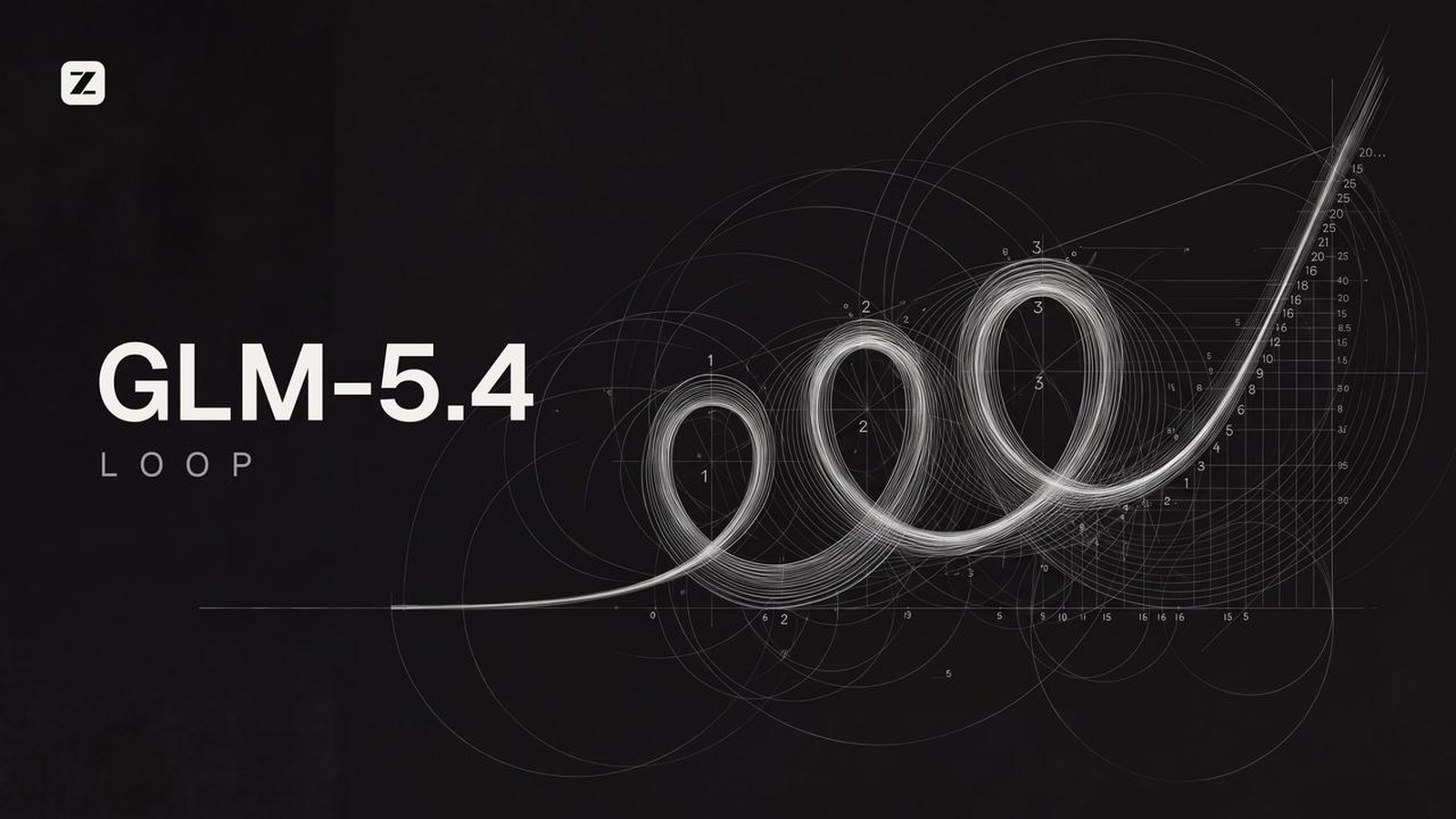
Z.ai công bố GLM-5.4, mô hình flagship đầu tiên xây trên kiến trúc Loop Transformer: 28 lớp của mô hình nền GLM-5 quy mô 750B được lặp hai vòng trong mỗi lượt suy luận. Theo Z.ai, mô hình đạt mức trí tuệ tương đương các mô hình 2T–3T tham số, đạt tới 200 token/giây ngoài giờ cao điểm, và mở đầu hướng lập trình tổng quát của hãng.Z.ai has announced GLM-5.4, its first flagship model built on a Loop Transformer architecture: 28 layers of the 750B-scale GLM-5 base model are looped for two iterations in each inference pass. According to Z.ai, the model reaches intelligence levels comparable to 2T–3T parameter models, runs at up to 200 tokens per second off-peak, and opens the company's push toward Generalized Coding.
Z.ai vừa công bố GLM-5.4, mô hình flagship đầu tiên của hãng xây trên kiến trúc Loop Transformer: 28 lớp của mô hình nền GLM-5 (quy mô 750B) được lặp lại hai vòng trong mỗi lượt suy luận. Theo Z.ai, cách làm này giúp mô hình suy luận sâu hơn mà không cần tăng số tham số, đạt mức trí tuệ tương đương các mô hình 2T–3T tham số, và là bước mở đầu cho hướng lập trình tổng quát (Generalized Coding) của hãng. Bài gốc đăng trên blog Z.ai ngày 23/11/2026.
Thay đổi gì
- GLM-5.4 là mô hình flagship đầu tiên của Z.ai dùng kiến trúc Loop Transformer, thay cho cách xếp chồng thêm lớp và tham số như thông thường.
- Đây là điểm khởi đầu của hướng Generalized Coding: Z.ai muốn biến lập trình thành nền tảng để giải quyết nhiều loại nhiệm vụ hơn, thay vì chỉ viết phần mềm.
- Hướng này bắt đầu từ đầu năm 2025, khi Z.ai dồn toàn lực vào lập trình và xác định ba năng lực mà lập trình mở khóa: Agentic Engineering, Long-Horizon Tasks và Cybersecurity.
- Người dùng đã có thể dùng thử qua GLM Coding Plan, ZCode và Z.ai Chat. API được ghi là sắp mở, còn trọng số mở được hứa hẹn công bố sau khi hãng hoàn tất gia cố an toàn.
Vì sao cần quan tâm
Z.ai phân biệt hai nhóm tác vụ: tác vụ nặng về bộ nhớ hưởng lợi từ nhiều tham số, còn tác vụ nặng về suy luận cần năng lực tính toán hiệu quả hơn. Kỹ thuật phần mềm quy mô lớn, an ninh mạng, mô hình 3D và điều khiển vật lý đều là những chuỗi suy luận rất dài, trong đó mô hình phải bám theo chuỗi nhân quả nhiều bước mà vẫn giữ nhất quán logic toàn cục. Theo lập luận của hãng, chỉ chồng thêm tham số và ghi nhớ dữ liệu không giải quyết được nhóm bài toán này, nên họ đánh cược vào chiều sâu tính toán.
Chi tiết cách hoạt động
Trong một Transformer thường, mỗi lớp chỉ chạy một lần trong một lượt truyền xuôi. Ở Loop Transformer, một nhóm lớp dùng chung trọng số chạy nhiều vòng, tinh chỉnh dần trạng thái ẩn của vòng trước, tạo ra một mạng sâu hơn mà không tăng số tham số. Ý tưởng này không mới (Universal Transformer năm 2018 đã đề xuất độ sâu dùng chung trọng số), nhưng mô hình loop huấn luyện từ đầu thường thua mô hình không dùng chung trọng số khi tính theo cùng ngân sách tiền huấn luyện. Z.ai chọn đường khác: chuyển một mô hình nền đã tiền huấn luyện thành Loop Transformer bằng huấn luyện tiếp nối, để nâng trần trí tuệ với chi phí tính toán bổ sung tương đối nhỏ. Ở GLM-5.4, 28 lớp của mô hình nền GLM-5 được lặp hai vòng, kèm ba thay đổi kiến trúc ở quy mô 750B:
- Cập nhật tiệm tiến có cổng (Gated Progressive Updates): việc ghi đè trực tiếp trạng thái ẩn qua nhiều vòng khiến chuẩn kích hoạt phình to và làm các lớp phía sau nhận biểu diễn lệch thang. GLM-5.4 bổ sung cổng độc lập theo từng token cho mỗi vòng lặp để ghi một phần cập nhật ứng viên trở lại dòng dư. Sau huấn luyện, vòng đầu viết dè dặt để giữ thang ổn định, vòng hai mở cổng viết đầy đủ để tinh chỉnh kết quả, và token càng khó thì vòng đầu càng viết mạnh hơn.
- Bộ nhớ đệm KV lai: thay vì giữ một bộ nhớ đệm KV đầy đủ cho mỗi vòng lặp, vòng hai tái dùng phần KV thưa mà vòng một đã chọn, đồng thời giữ KV mới sinh trong một cửa sổ trượt riêng. Nhờ vậy, thêm một vòng lặp chỉ tốn thêm một cửa sổ trượt KV thay vì cả bộ nhớ ngữ cảnh, và ở ngữ cảnh 1M token, mức tăng chi phí triển khai so với GLM-5.3 vẫn nằm trong tầm kiểm soát theo Z.ai.
- Tái dùng chỉ mục attention thưa: vòng hai dùng lại chỉ mục attention mà bộ lập chỉ mục của vòng một đã tạo, không tốn thêm chi phí lập chỉ mục, và theo thử nghiệm của hãng thì hiệu năng gần như tương đương việc tính lại chỉ mục ở mỗi vòng.
Trước khi đưa kiến trúc này lên mô hình flagship, Z.ai cho biết đã kiểm chứng lũy tiến trên các mô hình nền 1B, 4B, 30B và 750B. Z.ai cho biết trong ba tháng qua hãng đã mở rộng mạnh cả độ sâu vòng lặp lẫn quy mô mô hình. Ở phép so sánh cùng số tham số trên mô hình 30B, phiên bản loop dùng thêm khoảng 10% tổng tính toán huấn luyện và cho cải thiện rõ rệt, lớn nhất ở toán, suy luận khoa học và các tác vụ ngữ cảnh dài. Độ dài đầu ra giảm 10–14% trên các bài đánh giá như GPQA-Diamond và MMLU-Pro, vì một phần suy luận chuyển từ token hiện rõ vào chiều sâu ẩn của vòng lặp. Đây là số liệu do Z.ai tự công bố, đo trên mô hình 30B sau giai đoạn SFT ngữ cảnh dài 200K với chế độ thinking bật.
Tốc độ và cách dùng thử
Theo Z.ai, GLM-5.4 đạt tới 200 token/giây ngoài giờ cao điểm và duy trì 70–80 token/giây trong giờ cao điểm, nhờ đồng thiết kế mô hình với hạ tầng suy luận và hợp nhất các kernel cốt lõi ở tầng hệ thống. Hãng cũng trình diễn khả năng vượt ra ngoài lập trình truyền thống: dựng một video ca nhạc tự thuyết minh mang tên "Hello World", thiết kế cánh tay robot 6 trục bằng mô hình CAD cấp kỹ thuật trong FreeCAD, tạo một trò chơi hoàn chỉnh từ nhân vật, vật lý, bản đồ tới hệ thống chiến đấu, và dựng trải nghiệm ngắm chim 3D tương tác bằng hình học thuần túy với shader GLSL tự viết. Người dùng có thể dùng thử qua GLM Coding Plan, ZCode và Z.ai Chat.
Hướng đi tiếp theo
Z.ai cho biết đang nghiên cứu tính toán thích ứng, trong đó các token khó hơn được cấp thêm vòng lặp, đồng thời theo dõi cách lợi ích của vòng lặp thay đổi khi số vòng lặp và quy mô mô hình tăng lên. Hãng cũng đang chuẩn bị một mô hình tiếp theo lớn hơn đáng kể, mang theo các bài học từ GLM-5.4, và mô tả là sắp sẵn sàng.
Giới hạn thẳng thắn
- Z.ai tự thừa nhận GLM-5.4 còn rơi vào các vòng suy nghĩ quá dài kiểu marathon, dù chính việc phản tư kéo dài và tự sửa này giúp độ chính xác vượt kỳ vọng so với quy mô tham số.
- Mọi con số hiệu năng trong bài gốc, từ mức tương đương 2T–3T tham số tới mức cải thiện ở mô hình 30B và tốc độ token, đều do Z.ai tự công bố. Bản toàn văn thu thập được không kèm bảng số liệu benchmark đầy đủ và chưa có kiểm chứng độc lập trong tài liệu này.
- Bài gốc không công bố giá của GLM Coding Plan, ngày mở API và ngày phát hành trọng số mở, chỉ nêu các mốc này là sắp tới hoặc đang lên kế hoạch.
Z.ai has announced GLM-5.4, its first flagship model built on the Loop Transformer architecture: 28 layers of the GLM-5 base model (750B scale) are looped for two iterations in each inference pass. According to Z.ai, this lets the model reason more deeply without adding parameters, reaching intelligence levels comparable to 2T–3T parameter models, and marks the starting point of the company's Generalized Coding direction. The original post appeared on the Z.ai blog on November 23, 2026.
What Changed
- GLM-5.4 is Z.ai's first flagship model to use a Loop Transformer architecture, instead of simply stacking more layers and parameters as usual.
- It is the starting point of Generalized Coding: Z.ai wants code to become the foundation for solving a much wider range of tasks, not just writing software.
- This direction began in early 2025, when Z.ai went all-in on coding and identified three capabilities that coding unlocks: Agentic Engineering, Long-Horizon Tasks and Cybersecurity.
- Users can already try it through the GLM Coding Plan, ZCode and Z.ai Chat. The API is listed as coming soon, and open weights are promised once the company completes safety hardening.
Why You Should Care
Z.ai distinguishes two kinds of work: memory-intensive tasks benefit from more parameters, while reasoning-intensive tasks benefit from more effective compute. Large-scale software engineering, cybersecurity, 3D modeling and physical control are all ultra-long-chain reasoning tasks, where the model must follow multi-step causal chains while maintaining global logical consistency. Simply stacking parameters and memorizing data cannot solve this class of problem, the company argues, so it is betting on computational depth instead.
How It Works in Detail
In a standard Transformer, each layer runs once per forward pass. In a Loop Transformer, a group of weight-shared layers runs for multiple iterations, refining the hidden states from the previous pass, which gives a deeper network without increasing the parameter count. The idea is not new (the 2018 Universal Transformer proposed weight-shared depth), but looped models trained from scratch tend to lag unshared models under the same pre-training compute budget. Z.ai took a different route: it adapted an already pre-trained base model into a Loop Transformer through continued training, raising the intelligence ceiling with relatively small compute overhead. In GLM-5.4, 28 layers of the GLM-5 base model are looped for two iterations, with three architectural changes at the 750B scale:
- Gated Progressive Updates: directly overwriting hidden states across iterations makes activation norms blow up, so downstream layers receive representations outside their expected scale. GLM-5.4 adds independent per-token gates for each iteration to write candidate updates back into the residual stream proportionally. After training, the first pass writes conservatively with small gate values to keep scales stable, the second pass opens the gates to write full updates, and harder tokens get more aggressive first-pass writes.
- Hybrid KV Cache: instead of keeping a full KV cache for every loop iteration, the second loop reuses the sparse KV selected in the first pass while keeping its own newly generated KV in a local sliding window. An extra loop therefore costs only one sliding window of KV cache rather than a full context cache, and at 1M context lengths the deployment cost increase over GLM-5.3 stays well under control, according to Z.ai.
- Sparse Attention Index Reuse: the second loop directly reuses the attention indices generated by the first loop's indexer, adding zero indexing overhead, and the company's experiments show this performs nearly identically to recomputing indices on every pass.
Before committing its flagship model to this architecture, Z.ai says it validated the Loop design progressively across 1B, 4B, 30B and 750B base models. Z.ai says that over the past three months it has aggressively scaled both loop depth and model size. In a controlled iso-parameter comparison on a 30B model, the looped version used only about 10% more total training compute and showed clear gains, largest in math, scientific reasoning and long-context tasks. Average output length dropped by 10–14% on benchmarks such as GPQA-Diamond and MMLU-Pro, because part of the reasoning shifts from explicit output tokens into the implicit depth of the loop. These figures are Z.ai's own, measured on the 30B model after 200K long-context SFT with thinking mode enabled.
Speed and How to Try It
According to Z.ai, GLM-5.4 reaches up to 200 tokens per second during off-peak hours and maintains 70–80 tokens per second at peak load, thanks to close co-design between the model and its inference infrastructure and fused core kernels at the systems level. The company also demonstrates capabilities beyond traditional software development: producing a self-narrated music video titled "Hello World", building a 6-axis robotic arm through engineering-grade CAD modeling in FreeCAD, creating a complete game covering character movement, physics, maps, combat systems and art assets, and generating an interactive 3D bird-watching experience from pure mathematical geometry and custom GLSL shaders. Users can try the model through the GLM Coding Plan, ZCode and Z.ai Chat.
Looking Ahead
Z.ai says it is exploring adaptive compute, in which harder tokens receive more loop iterations, and is studying how the returns from looping behave as loop count and model size grow. The company is also preparing a next, significantly larger model that carries the lessons from GLM-5.4 forward, described as ready soon.
Honest Limits
- Z.ai itself acknowledges that GLM-5.4 tends to get caught in overly long marathon thinking loops, although this prolonged reflection and self-correction does consistently improve accuracy beyond its parameter count.
- Every performance figure in the original post, from the 2T–3T parameter comparison to the 30B ablation gains and the token speeds, is reported by Z.ai itself. The full text collected here includes no full benchmark table of values, and there is no independent verification in this material.
- The original post does not publish GLM Coding Plan pricing, an API launch date or an open-weights release date, stating only that these are coming soon or planned.
Nguồn tham chiếuSource: z.ai