SiMa.ai's Palette 3.0 runs many AI models on one chip and lifts throughput up to 3.5 timesSiMa.ai's Palette 3.0 runs many AI models on one chip and lifts throughput up to 3.5 times
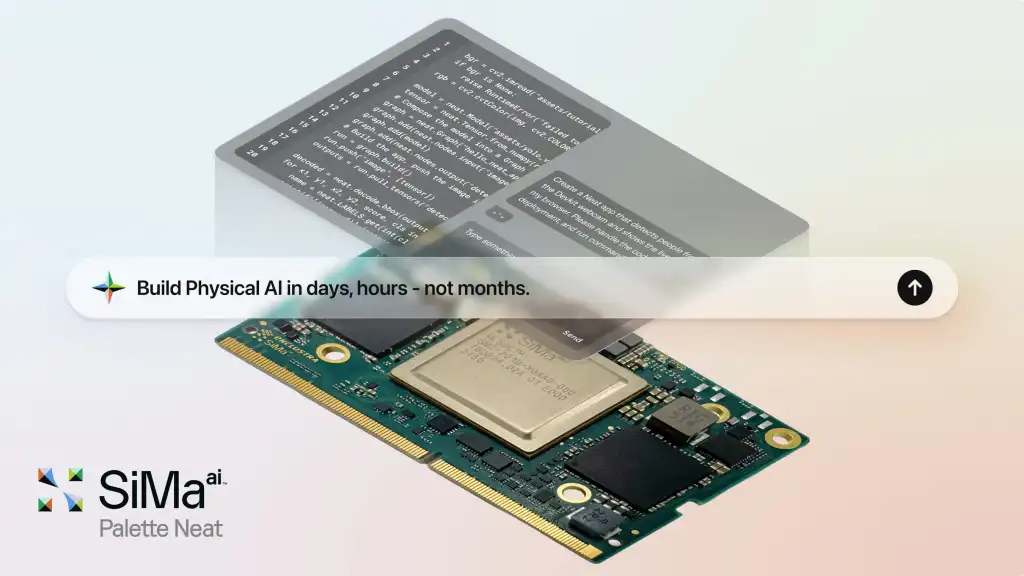
SiMa Technologies Inc. đã phát hành Palette 3.0, phiên bản mới của bộ phần mềm Palette nhằm cho phép nhiều mô hình AI chạy đồng thời trên một chip. Theo công ty, bản phát hành này có thể tăng thông lượng mô hình lên tới 3.5 lần và hướng tới các nhà phát triển drone, robot cùng những máy tự hành khác cần chạy mô hình AI ngay trên thiết bị.SiMa Technologies Inc. released Palette 3.0, a new version of its Palette software suite intended to allow many AI models to run concurrently on one chip. According to the company, the release can raise model throughput by as much as 3.5 times and is aimed at developers building drones, robots and other autonomous machines that need to run AI models on the device.
Một chip Modalix MLSoC giờ có thể chạy đồng thời suy luận phức tạp và nhiều tải đa mô hình mà vẫn duy trì mức điện năng thấp, nhờ Palette 3.0 của SiMa Technologies Inc. Kết luận cần mang về là thông lượng mô hình có thể tăng tới 3,5 lần, và lợi ích đó nhắm thẳng tới drone, robot cùng máy tự hành phải chạy AI ngay trên thiết bị thay vì trong trung tâm dữ liệu.
Điểm mới
Năng lực dẫn đầu bản phát hành là thực thi nhiều mô hình đồng thời được cải thiện trên cùng một chip. Các tải suy luận phức tạp và đa mô hình có thể vận hành song song, thay vì phải nhường nhau từng lượt trên phần cứng. Nền tảng còn chạy được các Docker container riêng biệt trực tiếp trên chip, giúp đội ngũ đóng gói và tách biệt từng thành phần AI trong quá trình phát triển và triển khai.
Danh mục tải được hỗ trợ gồm mô hình ngôn ngữ lớn, mô hình ngôn ngữ-thị giác, cùng các mô hình cảm nhận, độ sâu và suy luận mà drone và robot vẫn dùng; công ty cho biết nhóm mô hình sau chạy nhanh hơn trên phiên bản mới. Làm việc với đối tác hệ sinh thái, SiMa.ai còn thêm hợp nhất cảm biến thống nhất, trường độ sâu thần kinh dày đặc và mô phỏng song sinh số vòng kín. Mục tiêu được công ty nêu là gỡ các nút thắt tích hợp và kiểm chứng vốn làm chậm phát triển hệ thống tự hành, không chỉ tăng tốc suy luận.
Thông số nổi bật
Cơ chế đứng sau mức tăng hiệu năng là giải mã suy đoán, với ba thuật toán được nêu tên cụ thể.
| Hạng mục | Thông tin SiMa.ai công bố |
|---|---|
| Nền tảng chip | Modalix MLSoC |
| Mức tăng thông lượng | Tới 3,5 lần |
| Thuật toán giải mã suy đoán | EAGLE3, DFlash, Gemma 4 MTP |
| Mô hình MoE được nêu tên | GPT-OSS-20B của OpenAI Group PBC |
| Cấu hình chạy mô hình đó | Mô-đun hệ thống Modalix MLSoC 16GB |
| Ngày phát hành | 17/11/2026 |
Ví dụ cụ thể nhất là hỗ trợ các mô hình mixture-of-experts cỡ lớn: GPT-OSS-20B nay chạy được trên mô-đun hệ thống 16GB. Chi tiết này gắn tuyên bố hiệu năng với một mô hình tạo sinh có tên và dung lượng mô-đun xác định, thay vì chỉ áp dụng cho mô hình thị giác nhỏ ở biên. Dù vậy, nguồn chưa công bố số watt, độ trễ, TOPS hay điện năng đo riêng cho từng tác vụ, nên không thể suy ra hiệu quả năng lượng tuyệt đối từ mô tả điện năng thấp.
Thay cho bảng điện năng chi tiết, công ty công bố kết quả trong Model Registry mới và nói mọi kết quả đều được đo trong ràng buộc điện năng của thế giới thực. Chi tiết benchmark cạnh tranh chỉ được cung cấp khi có yêu cầu, vì vậy các đội ngũ đánh giá nên coi Model Registry là điểm bắt đầu để đối chiếu, không phải bằng chứng độc lập đã được kiểm chứng bên ngoài.
Khác gì bản trước
Palette 3.0 xây dựng trên Palette Neat, môi trường phát triển agentic được ra mắt hồi tháng 6. Điểm khác nằm ở tầng vận hành và bộ công cụ: thực thi đồng thời được cải thiện, đồng thời bản này bổ sung một tập hợp năng lực mã nguồn mở cho phát triển ứng dụng AI tạo sinh, và nhà phát triển có thể tự điều chỉnh mã nguồn mở đó.
Công ty còn tạo khác biệt bằng triết lý sản phẩm: các đối thủ lâu đời bị mô tả là đang điều chỉnh công nghệ trung tâm dữ liệu cũ, trong khi SiMa.ai nói hãng xây dựng cả phần mềm lẫn silicon chuyên biệt cho AI vật lý. Cần lưu ý nguồn không đưa bảng đối chiếu từng tính năng giữa các thế hệ Palette, nên ranh giới giữa tính năng hoàn toàn mới và tính năng được cải thiện chỉ rõ ở những mục công ty gọi đích danh là mới hoặc được cải thiện.
Giá và thời điểm dùng được
Palette 3.0 đã phát hành ngày 17/11/2026; tài liệu được cung cấp qua Developer Center của SiMa.ai và mã nguồn mở liên quan có trên GitHub. Nguồn chưa công bố giá của bộ phần mềm, điều khoản cấp phép toàn bộ nền tảng, hay giá chip và mô-đun, và sự hiện diện của mã nguồn mở không đồng nghĩa toàn bộ Palette 3.0 miễn phí. Vì vậy, mốc dùng được đã rõ — tài liệu và mã đã có kênh tiếp cận — nhưng chi phí triển khai vẫn là thông tin phải hỏi trực tiếp công ty.
Ai nên thử
Nhóm nên thử đầu tiên là nhà phát triển drone, robot và máy tự hành khác cần chạy AI trên thiết bị, nhất là khi một hệ thống phải kết hợp cảm nhận, độ sâu và suy luận cùng lúc trong giới hạn phần cứng biên. Nhóm thứ hai là đội ngũ muốn thử LLM, mô hình ngôn ngữ-thị giác hoặc mô hình MoE ngoài trung tâm dữ liệu và cần một nền tảng chạy nhiều mô hình trên cùng chip. Đội ngũ cần số liệu điện năng tuyệt đối trước khi chọn phần cứng sẽ chưa có đủ dữ kiện từ thông báo này để quyết định ngay.
500 triệu USD — tổng vốn SiMa.ai đã huy động tính tới nay.
Công ty thành lập năm 2018 bởi Giám đốc điều hành Krishna Rangasayee; riêng vòng Series C hồi tháng 9 đã huy động 150 triệu USD ở định giá 1,45 tỷ USD, do Fidelity Management & Research Co. và Amplify Partners đồng dẫn dắt. Khách hàng và đối tác đáng chú ý gồm Robert Bosch GmbH, Emerson Electric Co. và Synopsys Inc., một bối cảnh đáng cân nhắc khi đánh giá nhà cung cấp bên cạnh việc tự benchmark.
A single Modalix MLSoC chip can now run complex reasoning and multiple multi-model workloads concurrently while maintaining a low power level, thanks to Palette 3.0 from SiMa Technologies Inc. The takeaway to carry away is that model throughput can rise by up to 3.5 times, and that benefit is aimed squarely at drones, robots and autonomous machines that must run AI on the device rather than in a data center.
What's new
The release's leading capability is improved concurrent model execution on the same chip. Complex reasoning and multi-model workloads can operate in parallel, rather than having to take turns on the hardware. The platform can also run separate Docker containers directly on the chip, helping teams package and isolate individual AI components during development and deployment.
The supported workloads include large language models and vision-language models, alongside the perception, depth and reasoning models that drones and robots already use; the company says the latter group of models runs faster on the new version. Working with ecosystem partners, SiMa.ai has also added unified sensor fusion, dense neural depth fields and closed-loop digital twin simulation. The goal stated by the company is to remove the integration and validation bottlenecks that slow down autonomous development, not merely to accelerate inference.
Price and availability
Palette 3.0 was released on November 17, 2026; documentation is provided through SiMa.ai's Developer Center and the related open-source code is available on GitHub. The source does not publish the price of the software suite, licensing terms for the entire platform, or the price of the chip and module, and the presence of open-source code does not mean the whole of Palette 3.0 is free. The availability milestone is therefore clear — documentation and code have access channels — but deployment cost remains information that must be asked directly from the company.
Who should try it
The first group that should try it is developers of drones, robots and other autonomous machines who need to run AI on the device, especially when one system must combine perception, depth and reasoning at the same time within edge hardware limits. The second group is teams that want to try LLMs, vision-language models or MoE models outside a data center and need a platform that runs many models on a single chip. Teams that need absolute power figures before choosing hardware will not yet have enough data from this announcement to decide immediately.
$500 million — the total capital SiMa.ai has raised to date.
The company was founded in 2018 by Chief Executive Krishna Rangasayee; its Series C round in September alone raised $150 million at a $1.45 billion valuation, co-led by Fidelity Management & Research Co. and Amplify Partners. Notable customers and partners include Robert Bosch GmbH, Emerson Electric Co. and Synopsys Inc., a context worth considering when evaluating the vendor alongside running your own benchmarks.
Key specifications
The mechanism behind the performance increase is speculative decoding, with three algorithms named specifically.
| Item | Information published by SiMa.ai |
|---|---|
| Chip platform | Modalix MLSoC |
| Throughput increase | Up to 3.5 times |
| Speculative decoding algorithms | EAGLE3, DFlash, Gemma 4 MTP |
| Named MoE model | GPT-OSS-20B from OpenAI Group PBC |
| Configuration for running that model | Modalix MLSoC 16GB system-on-module |
| Release date | November 17, 2026 |
The most concrete example is support for large mixture-of-experts models: GPT-OSS-20B can now run on the 16GB system-on-module. This detail ties the performance claim to a named generative model and a specified module capacity, rather than applying it only to small vision models at the edge. However, the source does not publish watts, latency, TOPS or power measured separately for each task, so absolute energy efficiency cannot be inferred from the low-power description.
Instead of a detailed power table, the company publishes results in the new Model Registry and says every result is measured within real-world power constraints. Competitive benchmarking details are provided only on request, so evaluation teams should treat the Model Registry as a starting point for comparison, not as independently verified external evidence.
How it differs from the previous version
Palette 3.0 builds on Palette Neat, the agentic development environment launched in June. The difference lies in the operating layer and the toolset: concurrent execution has been improved, while this release adds a set of open-source capabilities for generative AI application development, and developers are free to adapt that open-source code.
The company also differentiates itself through its product philosophy: longstanding incumbents are described as adapting legacy data center technology, while SiMa.ai says it builds both software and silicon purpose-built for physical AI. Note that the source provides no feature-by-feature comparison table between Palette generations, so the boundary between entirely new features and improved features is clear only for items the company explicitly calls new or improved.
🔗 Nguồn tham chiếuSource: siliconangle.com