Warsh wants Fed officials to talk less. Instead, they’re talking moreWarsh wants Fed officials to talk less. Instead, they’re talking more
Mẹo: Dùng Microsoft Edge để nghe giọng đọc tiếng Việt tự nhiên hơn (HoaiMy, NamMinh).Tip: Use Microsoft Edge for more natural Vietnamese read-aloud voices (HoaiMy, NamMinh).
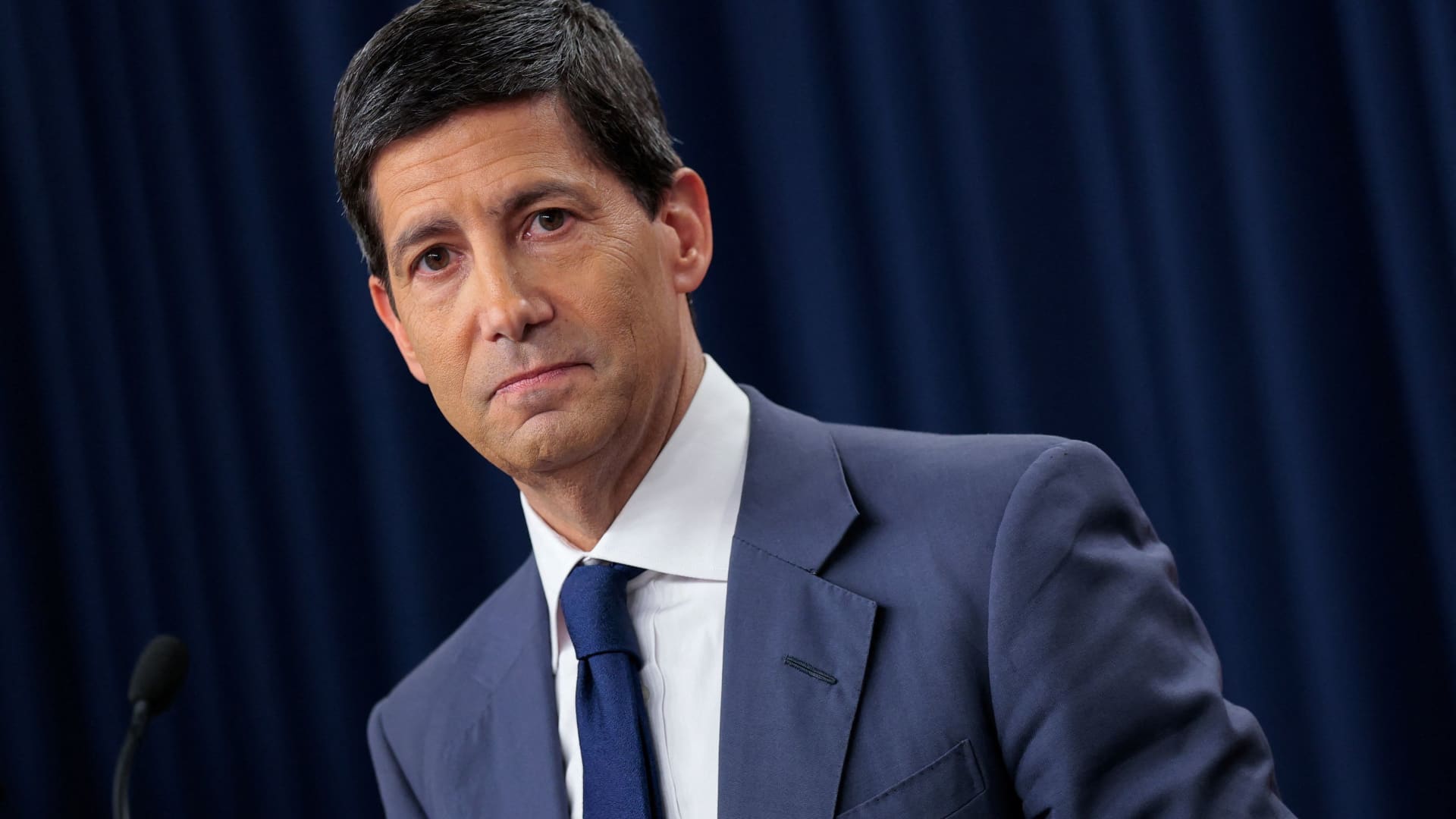
Chủ tịch Fed Warsh muốn các quan chức Fed nói ít hơn, nhưng thay vào đó họ lại nói nhiều hơn. Các quan chức Fed gần đây liên tục xuất hiện trước micro trong khi chủ tịch Fed đứng ngoài lề.Fed Chairman Warsh wants Fed officials to talk less, but instead they are talking more. Fed officials have been rushing to the microphones lately while the Fed chairman stays on the sidelines.
Chủ tịch Warsh muốn các quan chức Cục Dự trữ Liên bang Mỹ (Fed) nói ít hơn, nhưng họ đang làm ngược lại: liên tục xuất hiện trước micro trong khi ông đứng ngoài lề. Thông điệp cần mang về là rủi ro không chỉ nằm ở lãi suất tăng hay giảm, mà ở chỗ thị trường phải tự chắt lọc nhiều tiếng nói mà thiếu tiếng nói điều phối của chủ tịch. Một Fed nói nhiều nhưng không thống nhất sẽ khó dẫn dắt kỳ vọng hơn một Fed nói ít và rõ ràng.
Biến động
Điểm bất thường là sự đảo ngược thứ bậc phát ngôn quen thuộc. Thông thường, chủ tịch Fed là người đặt giọng điệu chính, còn các quan chức khác bổ sung góc nhìn quanh thông điệp đó. Lần này, theo ghi nhận của bài gốc, các quan chức gần đây liên tục xuất hiện trước micro, trong khi Warsh đứng ngoài lề. Khoảng trống ở vị trí trung tâm khiến mỗi phát biểu riêng lẻ dễ được thị trường cân đo như một tín hiệu chính sách, dù nguồn tin không nói rằng chúng đại diện cho một quyết định chung nào.
Chính bài gốc tóm tắt nghịch lý này ngay trong tiêu đề:
"Warsh wants Fed officials to talk less. Instead, they're talking more"
Nghịch lý nằm ở hướng thay đổi: định hướng giảm phát ngôn không tạo ra khoảng lặng, mà đi kèm tần suất xuất hiện dày hơn của những người còn lại. Biến động cần theo dõi ở đây là biến động về truyền thông chính sách, chưa phải biến động đã được xác nhận về lãi suất hay thị trường.
Số liệu chính
Bài gốc không công bố bảng số liệu thị trường, số lần phát biểu hay mức lãi suất cụ thể, nên phần này chỉ hệ thống hóa những dữ kiện định tính mà nguồn thực sự ghi nhận. Điểm đáng trích dẫn nhất là sự vắng mặt của con số thống nhất: không có một lịch phát biểu, một danh sách quan chức hay một thông điệp chung nào được nguồn nêu ra để thị trường đối chiếu.
| Hạng mục | Dữ kiện nguồn ghi nhận | Trạng thái công bố |
|---|---|---|
| Định hướng của Warsh | Muốn quan chức Fed nói ít hơn | Đã nêu |
| Thực tế gần đây | Quan chức nói nhiều hơn, liên tục trước micro | Đã nêu |
| Vai trò của Warsh | Đứng ngoài lề | Đã nêu |
| Số lần phát biểu, lãi suất, phản ứng thị trường | Không có con số cụ thể | Nguồn chưa công bố |
Bảng trên cho thấy bài toán không đo bằng điểm phần trăm, mà bằng độ lệch giữa ý định và thực tế.
Nguyên nhân
Nguyên nhân trực tiếp mà nguồn chỉ ra là khoảng cách giữa mong muốn của chủ tịch và hành vi của tập thể. Warsh muốn giảm phát ngôn, nhưng mong muốn đó — ít nhất trong giai đoạn được bài gốc ghi nhận — chưa chuyển thành sự im lặng đồng bộ. Nguồn không nêu một chỉ thị chính thức, một quy tắc phát biểu mới hay lý do riêng của từng quan chức, nên không thể kết luận đây là bất đồng công khai về lãi suất.
Lớp sâu hơn nằm ở cơ chế dẫn dắt kỳ vọng — forward guidance. Với ngân hàng trung ương, lời nói còn định hình kỳ vọng trước khi quyết định diễn ra, không chỉ thông báo sau đó. Nói ít hơn chỉ giảm nhiễu nếu người có trọng lượng nhất lên tiếng đúng lúc; khi chủ tịch đứng ngoài lề, khoảng trống được lấp bởi các quan chức khác. Vấn đề không phải nhiều lời tự thân xấu, mà là nhiều lời thiếu một trục chung.
Ý nghĩa với nhà đầu tư Việt Nam
Với nhà đầu tư Việt Nam, câu chuyện ở Washington không nằm ngoài danh mục, dù bài gốc không ghi nhận tác động cụ thể nào lên thị trường Việt Nam. Kỳ vọng về lãi suất Mỹ ảnh hưởng tới đồng USD, lợi suất toàn cầu và khẩu vị rủi ro — những kênh có thể truyền tới tỷ giá, dòng vốn ngoại và định giá tài sản trong nước. Nhưng chính vì nguồn chưa gắn bất kỳ biến động giá nào với các phát biểu lần này, phản ứng hợp lý không phải là mua bán theo một câu nói đơn lẻ.
Cách đọc thực tế là tách ba tầng: quan điểm cá nhân của một quan chức, tín hiệu chung của Fed và quyết định chính thức. Chỉ tầng thứ ba mới là căn cứ chắc nhất để điều chỉnh kỳ vọng lãi suất; hai tầng đầu cần được kiểm chứng chéo với nhau. Nguyên tắc mang về: đừng để một chiếc micro thay thế một quyết định của Fed.
Mốc cần theo dõi tiếp
Nguồn chưa công bố ngày giờ cụ thể, nên việc theo dõi phải dựa vào thay đổi hành vi, không phải lịch hẹn đã chốt. Mốc thứ nhất là Warsh có tự mình trở lại đặt giọng điệu hay không. Mốc thứ hai là tần suất xuất hiện của các quan chức có giảm theo định hướng nói ít hơn hay tiếp tục dày lên. Mốc thứ ba là các phát biểu có hội tụ về một thông điệp chung hay vẫn rời rạc. Nếu cả ba không đổi, thứ cần định giá vẫn là sự thiếu thống nhất trong truyền thông, chưa phải một lộ trình lãi suất mới.
*Thông tin tham khảo, không phải lời khuyên đầu tư.*
Chair Warsh wants officials at the U.S. Federal Reserve (Fed) to talk less, but they are doing the opposite: appearing before the microphone again and again while he stands on the sidelines. The takeaway is that the risk is not only whether interest rates rise or fall, but that the market must filter many voices without the coordinating voice of the chair. A Fed that talks a lot but is not unified will find it harder to guide expectations than a Fed that talks little and clearly.
The Move
The notable development is a reversal of the familiar hierarchy of public statements. Normally, the Fed chair sets the main tone and other officials add perspectives around that message. This time, according to the original article, officials have recently appeared before the microphone again and again, while Warsh has stood on the sidelines. The vacuum at the centre makes each individual statement easier for the market to weigh as a policy signal, even though the source does not say that they represent any common decision.
The original article summarises this paradox in its own headline:
"Warsh wants Fed officials to talk less. Instead, they're talking more"
The paradox lies in the direction of change: a push to reduce public statements has not created silence, but has come with more frequent appearances by everyone else. The move to watch here is therefore a move in policy communication, not yet a confirmed move in interest rates or markets.
Key Figures
The original article publishes no table of market data, no count of speeches and no specific interest rate, so this section only systematises the qualitative facts that the source actually records. The most quotable point is the absence of a unifying figure: there is no speaking schedule, no list of officials and no common message in the source for the market to check against.
| Item | What the source records | Publication status |
|---|---|---|
| Warsh's direction | Wants Fed officials to talk less | Stated |
| The recent reality | Officials are talking more, repeatedly before the microphone | Stated |
| Warsh's role | Standing on the sidelines | Stated |
| Number of speeches, interest rates, market reaction | No specific figure | Not published by the source |
The table shows that the problem is not measured in percentage points, but in the gap between intention and reality.
Why It Is Happening
The direct cause identified by the source is the gap between the chair's wishes and the behaviour of the group. Warsh wants fewer public statements, but that wish — at least in the period recorded by the original article — has not turned into coordinated silence. The source cites no formal directive, no new speaking rule and no individual official's reason, so it cannot be concluded that this is a public disagreement over interest rates.
The deeper layer lies in the mechanism for guiding expectations — forward guidance. For a central bank, words also shape expectations before a decision is made, not only announce it afterwards. Talking less only reduces noise if the person with the greatest weight speaks at the right moment; when the chair stands on the sidelines, the gap is filled by other officials. The problem is therefore not that many words are bad in themselves, but that many words lack a common axis.
What It Means for Vietnamese Investors
For Vietnamese investors, this story in Washington is not outside the portfolio, even though the original article records no specific impact on the Vietnamese market. Expectations for U.S. interest rates affect the U.S. dollar, global yields and risk appetite — channels that can transmit to exchange rates, foreign capital flows and domestic asset valuations. But precisely because the source attaches no price move to these latest statements, the sensible reaction is not to trade on a single remark.
The practical way to read it is to separate three layers: an individual official's personal view, the Fed's common signal, and the formal decision. Only the third layer is the firmest basis for adjusting interest-rate expectations; the first two need to be cross-checked against each other. The principle to take away: do not let one microphone replace a Fed decision.
Milestones to Watch Next
The source publishes no specific date or time, so monitoring must be based on changes in behaviour, not on a fixed appointment. The first milestone is whether Warsh himself returns to set the tone. The second is whether officials' appearances become less frequent in line with the talk-less direction, or continue to multiply. The third is whether statements converge on a common message or remain disjointed. If none of the three changes, what needs to be priced is still disunity in communication, not yet a new interest-rate path.
*For information only — not investment advice.*
Nguồn tham chiếuSource: CNBC