OpenAI và Cisco ra mắt Shirudo, công cụ bảo mật Linux hỗ trợ AI để chặn khai thác trước khi vá lỗiOpenAI and Cisco Unveil Shirudo, an AI-Assisted Linux Security Tool to Block Exploits Before Patching
OpenAI và Cisco vừa ra mắt Shirudo (nghĩa là "lá chắn" trong tiếng Nhật), một runtime Linux mã nguồn mở cho phép các tác nhân AI tự viết biện pháp kiểm soát eBPF động để che chắn hệ thống khỏi khai thác mà không cần dừng dịch vụ, theo The Hacker News. OpenAI gọi đây là bước đầu hướng tới "hạ tầng tự phòng thủ", trong bối cảnh AI đang tăng tốc việc phát hiện lỗ hổng trong các phần mềm nền tảng.
Diễn biến
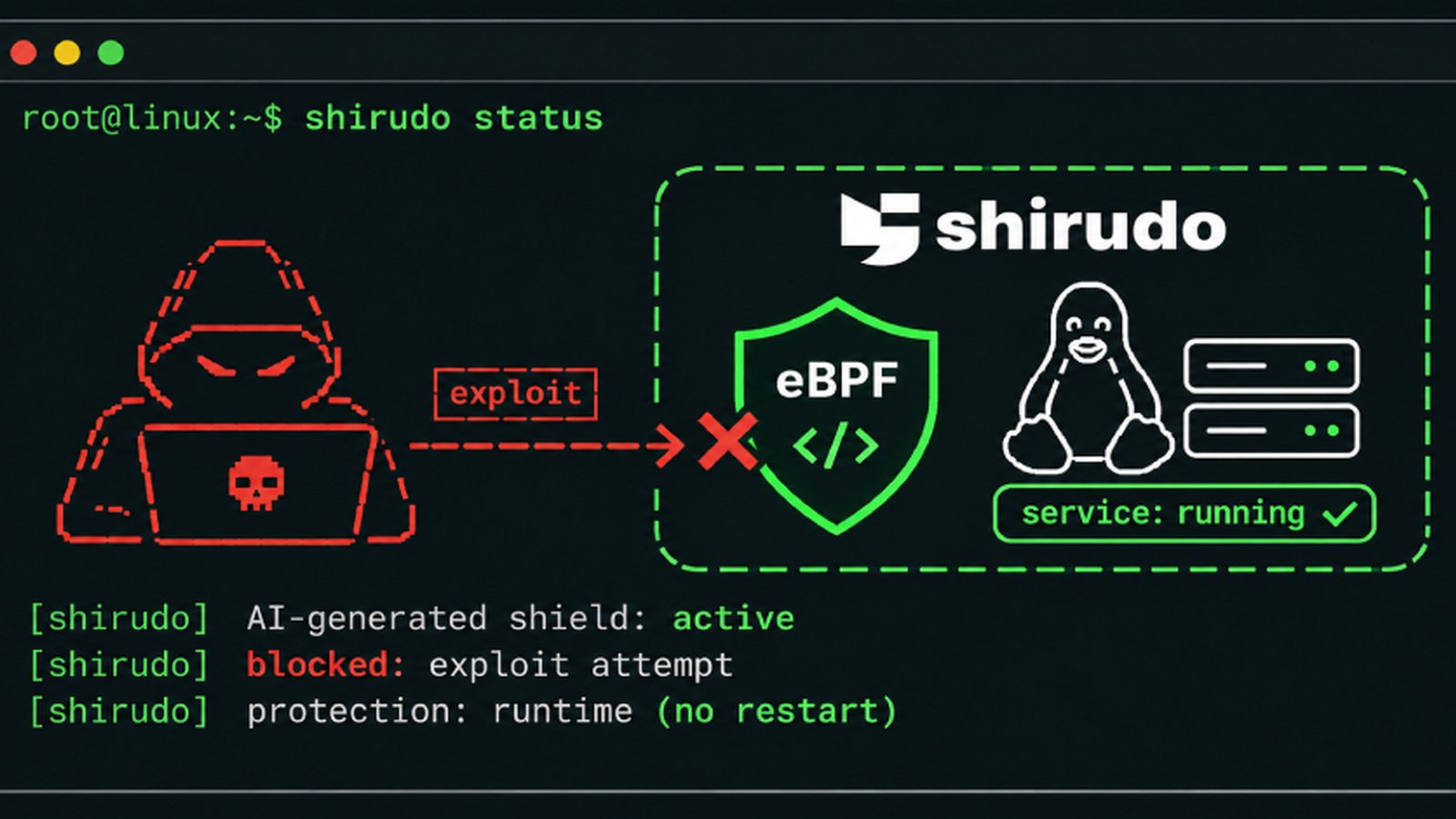
Theo OpenAI trên X, Shirudo "cho phép tác nhân viết các kiểm soát eBPF động để che chắn hệ thống khỏi khai thác, cho đội phòng thủ thêm thời gian kiểm thử và triển khai bản vá". Mục đích là để đội vận hành thử trước các lá chắn tạm thời, kiểm tra xem chúng có chặn đúng hành vi lộ lỗ hổng trong khi vẫn cho yêu cầu hợp lệ đi qua hay không; khi một lá chắn được người vận hành duyệt, nó được triển khai ngay mà không phải dừng dịch vụ, và tự rút lui khi bản vá thật ra mắt. Shirudo xây trên nền Tetragon, nền tảng bảo mật dùng eBPF do Isovalent (thuộc Cisco) phát triển và mở nguồn từ tháng Năm năm 2022, nhưng được thiết kế chủ yếu cho tác nhân AI và dùng eBPF để chèn biện pháp giảm nhẹ vào mã đang chạy.
Cơ chế
eBPF (extended Berkeley Packet Filter) là công nghệ cho phép chạy các chương trình nhẹ, được cách ly (sandbox) ngay trong nhân Linux mà không cần sửa mã hệ thống hay khởi động lại. Trung tâm của Shirudo là một tác nhân giám hộ (guardian agent) dùng các lá chắn eBPF để chặn đường mã dễ tổn thương mà không cần khởi động lại hệ thống; các lá chắn được ký và xác minh bằng mật mã trước khi nạp. Quy trình hoạt động theo Cisco gồm bốn bước:
- Tác nhân được giao tìm lỗ hổng mới trong ứng dụng, hoặc tiếp nhận thông tin lỗ hổng mới công bố từ các nguồn bên ngoài, rồi truy vết tới tài sản và đường tấn công bị ảnh hưởng.
- Shirudo trên máy của người vận hành dựng lá chắn gồm eBPF hoặc bytecode ứng dụng sau khi tái hiện và kiểm chứng hành vi khai thác.
- Lá chắn được phân phối dưới dạng gói .bee đã ký qua một registry tương thích OCI.
- Lớp Shirudo trên từng máy đích kéo các gói .bee về và xác thực từng chữ ký bằng TPM để thiết lập độ tin cậy trước khi kích hoạt chặn.
Trong một thử nghiệm có kiểm soát, OpenAI cho biết một lá chắn do Codex tạo ra đã chặn vụ khai thác Java4Shell nhắm vào một dịch vụ Elasticsearch đang chạy mà không cần khởi động lại.
Phạm vi ảnh hưởng
Shirudo nhắm vào khoảng trống nguy hiểm nhất hiện nay: bản sửa cho phần mềm dùng rộng rãi, từ nhân Linux tới các thư viện mọi ứng dụng phụ thuộc, vẫn mất vài ngày, vài tuần, thậm chí vài tháng mới tới được đa số hệ thống, trong khi thời gian trung bình tới khi lỗ hổng bị khai thác đã xuống mức âm theo Thomas Graf, Giám đốc công nghệ mảng bảo mật của Cisco, và Liz Rice, Giám đốc mã nguồn mở của Isovalent. Việc chặn khai thác mà không dừng dịch vụ quan trọng vì một hành vi khai thác và một yêu cầu hợp lệ có thể cùng dựa trên cùng một thao tác Linux nền tảng, nên cách vá truyền thống dễ gây gián đoạn hoàn toàn.
Vì sao tin này đáng chú ý
Đây là một trong những nỗ lực đầu tiên đưa tác nhân AI vào vai trò phòng thủ ở tốc độ máy: theo hai hãng, mô hình AI ngày càng giỏi tìm và khai thác lỗ hổng phần mềm, biết xâu chuỗi nhiều lỗ hổng và nghĩ ra hướng tấn công mới, nên phòng thủ cũng phải tự động hoá tương ứng. Nếu mô hình "lá chắn tạm thời" này vận hành được ở quy mô lớn, thời gian phơi nhiễm giữa lúc lỗ hổng bị công bố và lúc bản vá tới nơi sẽ rút ngắn đáng kể.
Việc cần làm ngay
- Đội vận hành hệ thống Linux có thể theo dõi mã nguồn mở của Shirudo và đánh giá thử trên môi trường không quan trọng trước, vì đây mới là bước đầu theo chính mô tả của OpenAI.
- Khi đánh giá, cần kiểm tra cơ chế duyệt của người vận hành và xác thực chữ ký gói .bee bằng TPM như thiết kế công bố, thay vì để tác nhân tự kích hoạt chặn hoàn toàn.
Giới hạn thẳng thắn
- Mọi thông tin đến từ một nguồn duy nhất là The Hacker News (tác giả Ravie Lakshmanan), dựa trên công bố của OpenAI và Cisco/Isovalent; kết quả chặn Java4Shell là thử nghiệm có kiểm soát do OpenAI mô tả, chưa có kiểm chứng độc lập trong chất liệu này.
- Bài gốc không nêu ngày phát hành chính thức, điều kiện cấp phép chi tiết, yêu cầu phiên bản nhân Linux hay mức độ sẵn sàng cho môi trường sản xuất.
- Các khuyến nghị ở mục việc cần làm là suy luận thực hành từ cơ chế được mô tả, không phải hướng dẫn chính thức của OpenAI hay Cisco.
Nguồn tham chiếu: The Hacker News (thehackernews.com) — thehackernews.com/2026/11/openai-and-cisco-unveil-ai-assisted.html
Đọc tiếp - Tin tặc khai thác lỗ hổng N-able MailAssure, tác nhân AI khai thác zero-day MONAI Label (https://news.danhthanh.dev/bai/tin-tac-khai-thac-lo-hong-n-able-mailassure-ai-khai-thac-monai-label-zero-day) - Trí tuệ kết nối cho đội ngũ pháp chế nội bộ (https://news.danhthanh.dev/bai/tri-tue-ket-noi-cho-phap-che-noi-bo)
OpenAI and Cisco have teamed up to launch Shirudo (meaning "shield" in Japanese), an open-source Linux runtime that allows AI agents to defend systems without downtime, according to The Hacker News. OpenAI called the initiative a first step toward "self-defending infrastructure," as AI accelerates vulnerability discovery in foundational software.
Timeline
According to OpenAI on X, Shirudo "lets agents write dynamic eBPF controls to shield systems from exploits, giving defenders more time to test and roll out patches." Defenders can test temporary safeguards (shields) and check whether they block the behavior that exposes a vulnerability while letting legitimate requests pass through; once a shield is approved by an operator, it can be deployed without stopping the service, and it retires when the real patch lands. Shirudo is built atop Tetragon, the eBPF-based security platform that Isovalent (part of Cisco) developed and open-sourced in May 2022, but it is primarily designed for agents and leverages eBPF to inject code mitigations.
Mechanism
eBPF (extended Berkeley Packet Filter) makes it possible to run lightweight, sandboxed programs inside the Linux kernel without modifying system code or restarting it. Central to Shirudo is a guardian agent that uses eBPF shields to block vulnerable code paths without restarting the system; the shields are cryptographically signed and verified before being loaded. The workflow, per Cisco, has four steps:
- An agent is tasked with finding new vulnerabilities in an application, or works from external sources of new vulnerability disclosures, tracing each vulnerability to the affected assets and attack paths.
- Shirudo on the operator machine builds a security shield consisting of eBPF or application bytecode after reproducing and validating the exploit.
- The shield is delivered as signed .bee packages via an OCI-compliant registry.
- The Shirudo layer on each target pulls the .bee packages and validates each signature using TPMs to establish trust and safety before active blocking.
In a controlled experiment, OpenAI said, a Codex-generated shield blocked a Java4Shell exploit attempt against a running Elasticsearch service without requiring a restart.
Scope of Impact
Shirudo targets today's most dangerous gap: a critical fix in widely used software, from the Linux kernel to the libraries every application depends on, still takes days, weeks or even months to reach the majority of systems, while the mean time to exploitation has become negative, according to Thomas Graf, CTO of Cisco Security, and Liz Rice, chief open source officer at Isovalent. Blocking an exploit without stopping the service matters because an exploit and a legitimate request may rely on the same underlying Linux operation, so traditional patching can force a complete service disruption.
Why This Matters
This is one of the first attempts to put AI agents on the defensive side at machine speed: according to the two companies, AI models have become very good at finding and exploiting software vulnerabilities, can chain flaws together and discover creative new attack vectors, so defense has to automate in kind. If the temporary-shield model works at scale, it would significantly shorten the exposure window between a vulnerability's disclosure and the arrival of a patch.
What to Do Now
- Linux operations teams can follow Shirudo's open-source release and evaluate it first in non-critical environments, since OpenAI itself describes it as a first step.
- When evaluating, verify the operator-approval step and the TPM-based signature validation of .bee packages as designed, rather than letting agents activate blocking entirely on their own.
Honest Limits
- All information comes from a single source, The Hacker News (by Ravie Lakshmanan), based on announcements by OpenAI and Cisco/Isovalent; the Java4Shell blocking result is a controlled experiment described by OpenAI, with no independent verification in this material.
- The original article gives no official release date, detailed licensing terms, Linux kernel version requirements, or production-readiness statement.
- The recommendations in the action section are practical inferences from the mechanism described, not official guidance from OpenAI or Cisco.
Reference source: The Hacker News (thehackernews.com) — thehackernews.com/2026/11/openai-and-cisco-unveil-ai-assisted.html
Read next - Hackers Exploit N-able MailAssure Flaw While AI Agents Exploit MONAI Label Zero-Day (https://news.danhthanh.dev/en/hackers-exploit-n-able-mailassure-flaw-ai-agents-exploit-monai-label-zero-day) - Connected Intelligence for In-House Legal (https://news.danhthanh.dev/en/connected-intelligence-for-in-house-legal)
Nguồn tham chiếuSource: thehackernews.com