Lỗ hổng RCE pre-auth trong xử lý HTTP/2 của NginxPre-auth RCE in Nginx HTTP/2 handling
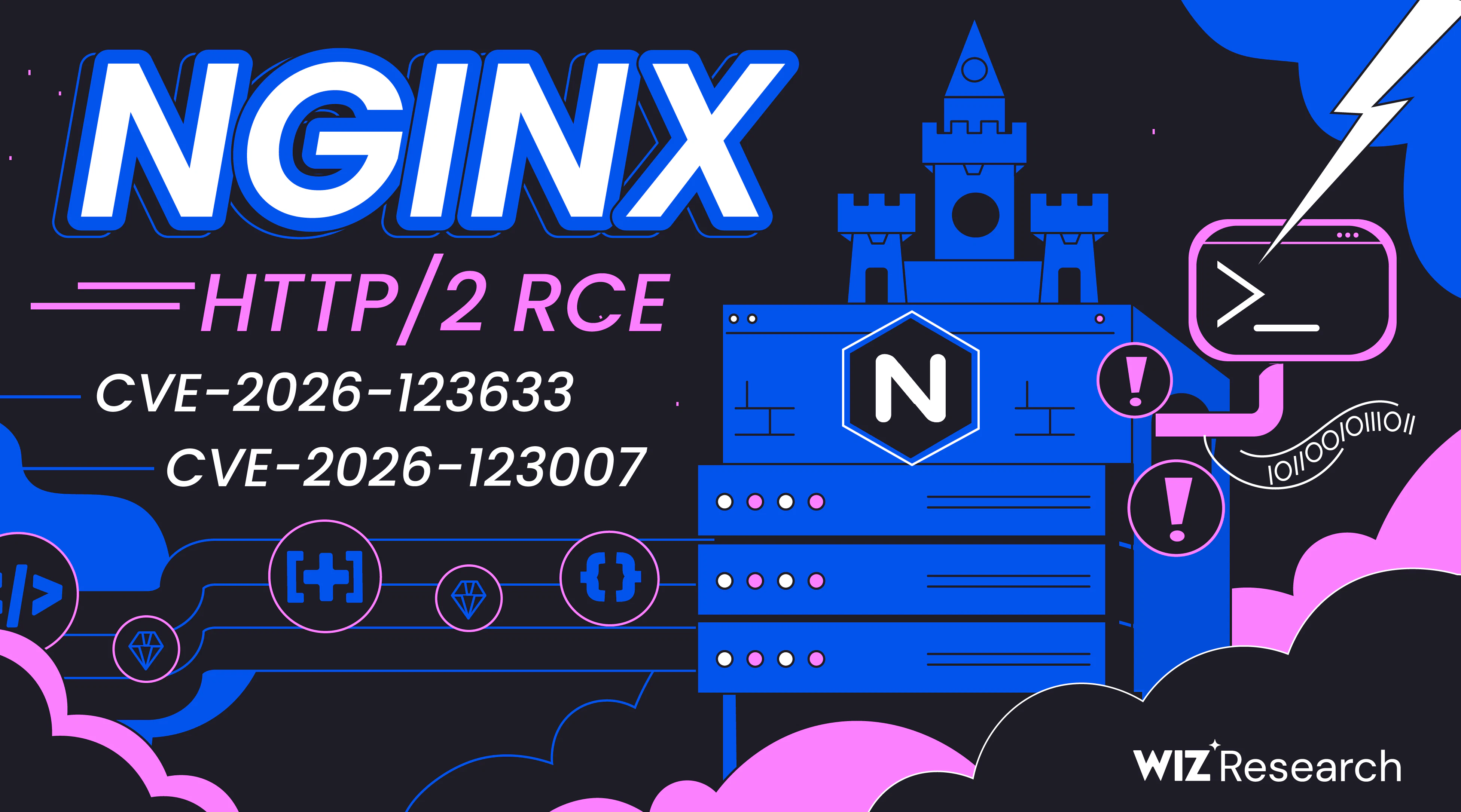
Wiz mô tả lỗ hổng thực thi mã từ xa (RCE) tiền xác thực trong cách Nginx xử lý HTTP/2. Bài viết được đăng trên blog của Wiz.Wiz describes a pre-authentication remote code execution (RCE) vulnerability in the way Nginx handles HTTP/2. The article was published on the Wiz blog.
Một kẻ tấn công không cần đăng nhập vẫn có thể thực thi mã từ xa trên máy chủ NGINX có bật HTTP/2 nhờ hai lỗ hổng vừa được công bố đồng loạt ngày 18/11/2026. Cả hai đều ở mức Critical và nằm trong chính NGINX, nên mã ứng dụng an toàn cũng không đủ để bảo vệ website hay API phía sau. Kết luận cần mang về rất rõ: mọi triển khai NGINX có HTTP/2 phải được rà soát và cập nhật bản phát hành bảo mật mới nhất của F5.
Diễn biến
Năm nhóm — Wiz Research, Ikotas Labs, Metnir, Rapid7 và Xint — độc lập phát hiện hai lỗ hổng và báo cáo cho F5, công ty đứng sau NGINX. Ngày 21/10/2026, Wiz gửi báo cáo đầu tiên về lỗi use-after-free trong HTTP/2, kèm bằng chứng thực thi mã từ xa đã vượt qua ASLR và một bản sửa đề xuất. F5 khi đó xác nhận một nhóm nghiên cứu khác đã báo trùng chính lỗ hổng này từ trước, vì vậy phát hiện không đến từ một nguồn duy nhất.
Đến 10/11/2026, F5 gửi bản vá của lỗ hổng đầu tiên cho phía Wiz xem xét. Sáu ngày sau, vào 16/11/2026, Wiz báo cáo thêm lỗ hổng HTTP/2 thứ hai. Chỉ một ngày sau đó, 17/11/2026, F5 xác nhận báo cáo thứ hai khớp với một mã định danh đã ghi nhận và sẽ được đưa vào đợt phát hành bảo mật dự kiến ngày hôm sau. Đợt phát hành của F5 và công bố công khai có phối hợp cùng diễn ra vào 18/11/2026, trong bài viết của Nir Ohfeld và Tomer Schwartz trên blog Wiz.
Cơ chế
| Mã định danh | Kiểu lỗi bộ nhớ | Mức độ |
|---|---|---|
| CVE-2026-123633 | Use-after-free | CVSS 4.0: 9.2 — Critical |
| CVE-2026-123007 | Integer underflow | CVSS 4.0: 9.2 — Critical |
Cả hai đều thuộc nhóm lỗi an toàn bộ nhớ (memory-safety) nằm trong xử lý HTTP/2 của NGINX, và cả hai đều cần điều kiện HTTP/2 đang được bật trên máy chủ bị nhắm tới. Wiz mô tả việc tìm ra các lỗi này đòi hỏi truy vết những tương tác tinh vi giữa các thao tác bộ nhớ và nhiều đường mã khác nhau. Chính độ phức tạp đó, theo bài viết, trong nhiều năm đã tạo ra một rào cản thực tế khiến loại lỗi này cực kỳ khó phát hiện và khó khai thác.
Riêng CVE-2026-123007 đã được thử nghiệm thành công trên một NGINX chỉ phục vụ file tĩnh thông thường, không cần ứng dụng backend và không cần module của bên thứ ba. Quá trình phát hiện dùng Wiz Atlas, khung công cụ đứng sau giải pháp quét mã bằng AI của Wiz, còn Gemini 4 Carbon và ChatGPT 5.6 Sol được các nhà nghiên cứu dùng để kiểm chứng tác động. Kết quả kiểm chứng, theo Wiz, xác nhận từng lỗ hổng đều có thể cho phép kẻ tấn công chưa xác thực thực thi mã trên máy chủ. Bài viết đặt hai lỗi này cạnh PHP2Shell được nhóm báo cáo tháng trước và Java4Shell do Calif công bố một ngày trước, như những ví dụ mới của cùng một họ lỗi bộ nhớ.
Phạm vi ảnh hưởng
NGINX phục vụ hơn 225 triệu website và được Wiz gọi là máy chủ web mã nguồn mở được dùng rộng rãi nhất thế giới.
Vị trí của NGINX khiến phạm vi không dừng ở một website đơn lẻ: nó thường đứng ở cửa trước của kiến trúc web hiện đại, xử lý HTTPS và điều hướng lưu lượng tới đúng ứng dụng hoặc API. Một triển khai NGINX cũng thường gánh lưu lượng cho nhiều ứng dụng, vì vậy một máy chủ bị chiếm có thể kéo theo nhiều dịch vụ cùng gặp rủi ro.
Khi khai thác thành công, kẻ tấn công có thể kiểm soát máy chủ chạy NGINX, đánh cắp dữ liệu nhạy cảm, sửa đổi nội dung website hoặc làm gián đoạn dịch vụ. Chiều dài lịch sử là phần đáng lo nhất trong phạm vi: lỗi tràn dưới số nguyên (integer underflow) bắt đầu từ NGINX 1.9.5 năm 2015 và đã ẩn trong mã hơn một thập kỷ, còn lỗi use-after-free đã tồn tại gần sáu năm.
Wiz cho biết còn có các điều kiện bổ sung ngoài những gì đã nêu, nhưng phần chất liệu được cung cấp chưa liệt kê cụ thể những điều kiện đó, nên chưa thể kết luận mọi máy chủ bật HTTP/2 đều khai thác được theo cùng một cách.
✅ Việc cần làm ngay
Khuyến nghị trực tiếp từ bài viết chỉ gồm hai việc, nhưng phải làm theo thứ tự: nhận diện triển khai bị ảnh hưởng trước, rồi áp dụng bản cập nhật bảo mật.
- Rà soát toàn bộ hệ thống NGINX để xác định những triển khai thuộc diện bị ảnh hưởng, đặc biệt là các máy chủ đang bật HTTP/2 — điều kiện bắt buộc mà nguồn nêu cho cả hai lỗ hổng.
- Cập nhật lên bản phát hành mới nhất; Wiz khuyến nghị bản mới nhất vì nó chứa nhiều bản sửa bảo mật, không chỉ riêng hai CVE này.
- Đối chiếu với đợt phát hành bảo mật ngày 18/11/2026 của F5, vì đây là đợt phát hành gắn với công bố phối hợp của hai lỗ hổng.
Nguồn trong phần chất liệu này chưa nêu số hiệu phiên bản đã vá cụ thể, danh sách phiên bản bị ảnh hưởng đầy đủ ngoài mốc 1.9.5, hay một biện pháp tạm thời thay cho cập nhật. Không tự suy ra phiên bản an toàn từ mốc 1.9.5; căn cứ hành động mà bài viết đưa ra là bản mới nhất của F5.
An attacker who does not need to log in can still execute code remotely on an NGINX server with HTTP/2 enabled through two vulnerabilities that were publicly disclosed together on 18 November 2026. Both are rated Critical and lie in NGINX itself, so secure application code is not enough to protect the website or API behind it. The clear takeaway is this: every NGINX deployment with HTTP/2 must be reviewed and updated to the latest security release from F5.
Timeline
Five groups — Wiz Research, Ikotas Labs, Metnir, Rapid7 and Xint — independently discovered the two vulnerabilities and reported them to F5, the company behind NGINX. On 21 October 2026, Wiz sent the first report on the HTTP/2 use-after-free flaw, including confirmed remote code execution with an ASLR bypass and a proposed fix. F5 then confirmed that another research team had previously reported the same vulnerability, so the discovery did not come from a single source.
On 10 November 2026, F5 supplied a patch for the first vulnerability to Wiz for review. Six days later, on 16 November 2026, Wiz reported a second HTTP/2 vulnerability. Just one day later, on 17 November 2026, F5 confirmed that the second report matched a recorded identifier and would be included in the security release planned for the following day. F5's release and the coordinated public disclosure both took place on 18 November 2026, in the article by Nir Ohfeld and Tomer Schwartz on the Wiz blog.
Mechanism
| Identifier | Memory flaw type | Severity |
|---|---|---|
| CVE-2026-123633 | Use-after-free | CVSS 4.0: 9.2 — Critical |
| CVE-2026-123007 | Integer underflow | CVSS 4.0: 9.2 — Critical |
Both belong to the group of memory-safety flaws in NGINX's HTTP/2 handling, and both require HTTP/2 to be enabled on the targeted server. Wiz describes finding these flaws as requiring tracing subtle interactions between memory operations and multiple code paths. According to the article, that very complexity for many years created a practical barrier that made this type of flaw extremely difficult to discover and exploit.
CVE-2026-123007 in particular was successfully tested on an NGINX instance serving only ordinary static files, with no backend application and no third-party modules needed. The discovery process used Wiz Atlas, the harness behind Wiz's AI code-scanning solution, while Gemini 4 Carbon and ChatGPT 5.6 Sol were used by the researchers to validate the impact. According to Wiz, the validation confirmed that each vulnerability could allow an unauthenticated attacker to execute code on the server. The article places these two flaws alongside PHP2Shell, reported by the team last month, and Java4Shell, disclosed by Calif a day earlier, as new examples of the same family of memory flaws.
Scope of impact
NGINX powers more than 225 million websites and is described by Wiz as the world's most widely used open-source web server.
NGINX's position means the scope does not stop at a single website: it often stands at the front door of modern web architectures, handling HTTPS and routing traffic to the right application or API. A single NGINX deployment also often carries traffic for several applications, so one compromised server can put multiple services at risk at the same time.
When exploitation succeeds, an attacker can take control of the server running NGINX, steal sensitive data, tamper with website content or disrupt services. The length of history is the most worrying part of the scope: the integer underflow flaw dates back to NGINX 1.9.5 in 2015 and had been hidden in the code for more than a decade, while the use-after-free flaw had existed for nearly six years.
Wiz says there are additional conditions beyond those already stated, but the material provided does not list those conditions in detail, so it cannot be concluded that every server with HTTP/2 enabled can be exploited in the same way.
✅ What to do now
The article's direct recommendation consists of only two tasks, but they must be done in order: identify the affected deployments first, then apply the security update.
- Review all NGINX systems to determine which deployments are affected, paying particular attention to servers with HTTP/2 enabled — the mandatory condition the source states for both vulnerabilities.
- Update to the latest release; Wiz recommends the latest release because it contains multiple security fixes, not only fixes for these two CVEs.
- Check against F5's security release of 18 November 2026, because this is the release tied to the coordinated disclosure of the two vulnerabilities.
The source in this material does not state the specific patched version number, a full list of affected versions beyond the 1.9.5 marker, or a temporary workaround instead of updating. Do not infer a safe version from the 1.9.5 marker; the basis for action given by the article is F5's latest release.
🔗 Nguồn tham chiếuSource: Hacker News